Where to Find Vintage Frames for Menu Wall Art (Thrift, Estate Sales, Antique Malls)
TL;DR — The single highest-leverage move in framing a vintage menu is using an actual vintage frame. A 1920s gilded oak frame from a Goodwill costs $8 and does more for the piece than a $180 custom job. Five places to look (Goodwill, estate sales, Facebook Marketplace, antique malls, Habitat ReStore), what to look for (ornate gold-leaf, dark stained wood, simple gilded oak — not modern plain frames), and the one logistical detail nobody mentions (most thrift frames need new glass — any frame shop will cut and mount for $20–$40).
Why a real vintage frame outperforms a new one — every time
A new frame, no matter how well made, looks new. Even a “distressed” reproduction has a uniformity to the wear pattern that the eye reads as fake within half a second.
A frame that actually spent forty years on someone’s wall has irregularity. The gilt has rubbed unevenly. There’s a hairline crack on one corner. The wood has darkened where the previous owner’s hand touched it. None of this is visible from across the room, but all of it is visible up close — and it’s exactly what your eye expects from a frame that’s been holding a 1903 menu for a century.
The cost differential is the part nobody believes until they look. A serviceable vintage frame in the right style runs $5–$50. A new frame that approximates the look runs $80–$300. The vintage frame looks better.
Path 1 — Goodwill, Salvation Army, and thrift stores
The volume play. Most thrift stores cycle through framed prints constantly — donated estate art, hotel decor liquidations, gallery downsizing. The frames are usually priced separately from the prints inside; you’re buying for the frame.
How often to go: Weekly if you’re building a wall of 6+ menus, monthly if you need 1–2. Inventory turns fast. Tuesday and Thursday tend to be restock days at most chains.
What to look for:
- Ornate gold-leaf (genuine or composition gold, both work) — best for Belle Époque, Edwardian, and Gilded Age menus
- Dark stained wood, especially walnut or mahogany — best for early American, ocean liner, and 1900–1920 hotel menus
- Gilded oak with simple molding — versatile, works for almost any era
- Aged brass corner detail — good for railroad and steamship menus
What to skip:
- Modern plain black or white frames (defeats the point)
- Heavy 1980s “shabby chic” distressed frames (the distressing pattern is wrong)
- Anything obviously plastic — even with gold paint, the weight gives it away
Price expectation: $3–$25 at Goodwill, slightly higher at smaller independent thrifts.
Path 2 — Estate sales (the Saturday morning play)
This is where the real frames are. When an estate is sold, all the artwork from a house comes out at once — and the family typically wants to clear it. Frames that would be $80 at an antique store sit on tables at estate sales for $10–$30.
How to find them: EstateSales.net is the dominant aggregator. List by zip code, sort by date, filter for sales mentioning “art,” “paintings,” “frames,” “prints,” or “wall decor.”
The Saturday morning strategy: Estate sales typically run Friday–Sunday with descending discounts (full price Friday, 25% off Saturday, 50% off Sunday). The best frames go Friday. If you have specific targets in mind, go Friday early. If you’re playing volume — looking for any of 3–4 styles — go Saturday for the discount.
What to ask: Many sales have unframed prints they’d be happy to pull from frames if you ask. “Would you sell just the frame?” works better than expected. They want it gone.
Price expectation: $10–$50 for genuinely vintage frames in working condition.
Path 3 — Facebook Marketplace
The middle ground. More expensive than thrift, cheaper than antique stores, easier to filter than estate sales.
Search terms that work:
- “vintage frame” (broadest)
- “antique frame”
- “ornate frame”
- “gold gilt frame” (for Belle Époque pairings)
- “gold leaf frame”
- “wood frame antique”
- Frame size, e.g. “16×20 frame vintage”
Filter tip: Sort by distance and price ascending. Sellers clearing estates often list frames at $15–$25 just to get them out of the garage. Sellers running a side business list at $60–$120 — skip those for individual frames, but keep them in mind if you ever need 6 matching frames for a gallery wall.
Price expectation: $15–$60 for individual frames, $80–$200 for matched sets.
Path 4 — Antique malls and consignment stores
Higher prices, dramatically better selection. If you’re sourcing one signature frame for a single statement piece, this is the path. If you’re sourcing six frames for a gallery wall, this is the wrong path.
What you’re paying for: Curation. The dealer has already filtered out junk. The frames in front of you are all viable. You’re paying $60–$180 instead of $15–$40 for that filter.
When it’s worth it: Looking for a specific size or style on a deadline. Looking for matched pairs. Looking for an unusually ornate or unusually clean specimen.
The negotiation: Most antique mall dealers will discount 10–20% on a single piece if you ask politely. Some will discount 25–30% on two or more.
Path 5 — Habitat for Humanity ReStore
The sleeper. Habitat ReStores accept donations from construction sites, real estate liquidations, and home renovations. Frames show up constantly, often in the “miscellaneous home decor” section. Prices are donation-charity low — $5–$20 for frames that would be $60–$120 at an antique mall.
Catch: Selection is unpredictable. Some days there are twenty frames; some days zero. The location matters: stores in older neighborhoods turn up more vintage frames than newer suburb stores.
The logistical detail nobody mentions: glass
Most thrift and estate-sale frames need new glass. It’s either missing, broken, or so scratched it ruins the print.
This is not a problem. Any frame shop — Michaels, an independent local — will cut new glass to fit any frame for $15–$40. UV-protective glass is a $15–$25 upgrade and worth it for any piece hung where sunlight hits.
Bring the frame and your already-printed menu to the shop. They’ll cut glass, install a fresh acid-free backing board, mount the print, and hand it back ready to hang. Usually same-day or next-day.
Total real cost of a vintage-frame piece:
- $15 frame (thrift)
- $20 new glass + acid-free backing
- $25 print (Mpix matte)
- = $60 total for a piece that looks like it cost $250.
A note on cleaning old frames
A frame that’s been in storage for forty years is usually dusty, not damaged. A soft dry brush (a clean paintbrush works) clears it in two minutes. For gilded surfaces, never use water — water lifts old gilt. For solid wood frames, a slightly damp microfiber cloth and a tiny amount of wood polish (Howard’s Feed-N-Wax, or any quality furniture wax) brings the color back and seals the surface.
Do not refinish. Do not repaint. Do not “restore.” Every imperfection on a vintage frame is what makes it work for a vintage menu. Leave it alone.
Once you’ve got the frame and the print
The pairing is the final decision: which menu lives in which frame, where on the wall, in what configuration. Our full print and frame guide has the by-use-case breakdown — signature piece behind the bar, gallery wall in the dining room, statement piece by the host stand — and how the frame style should follow.
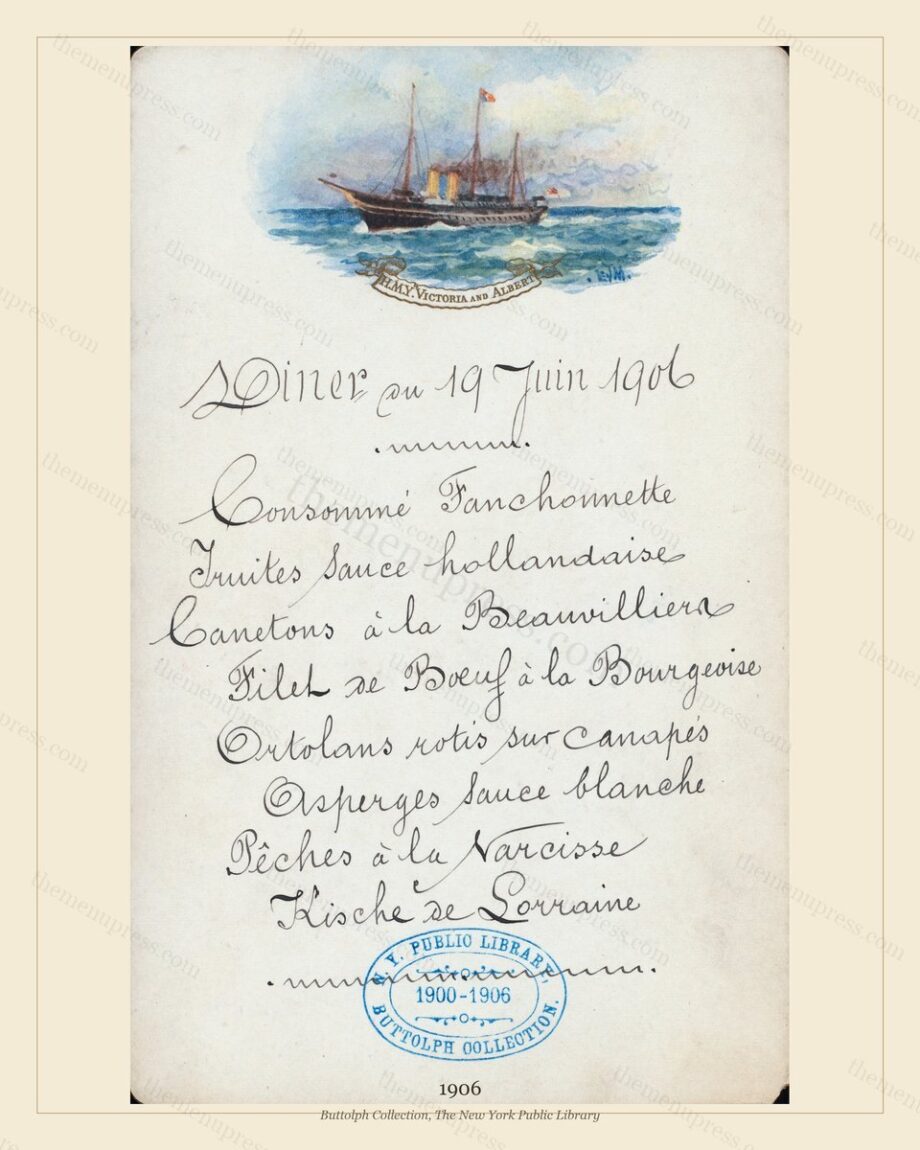
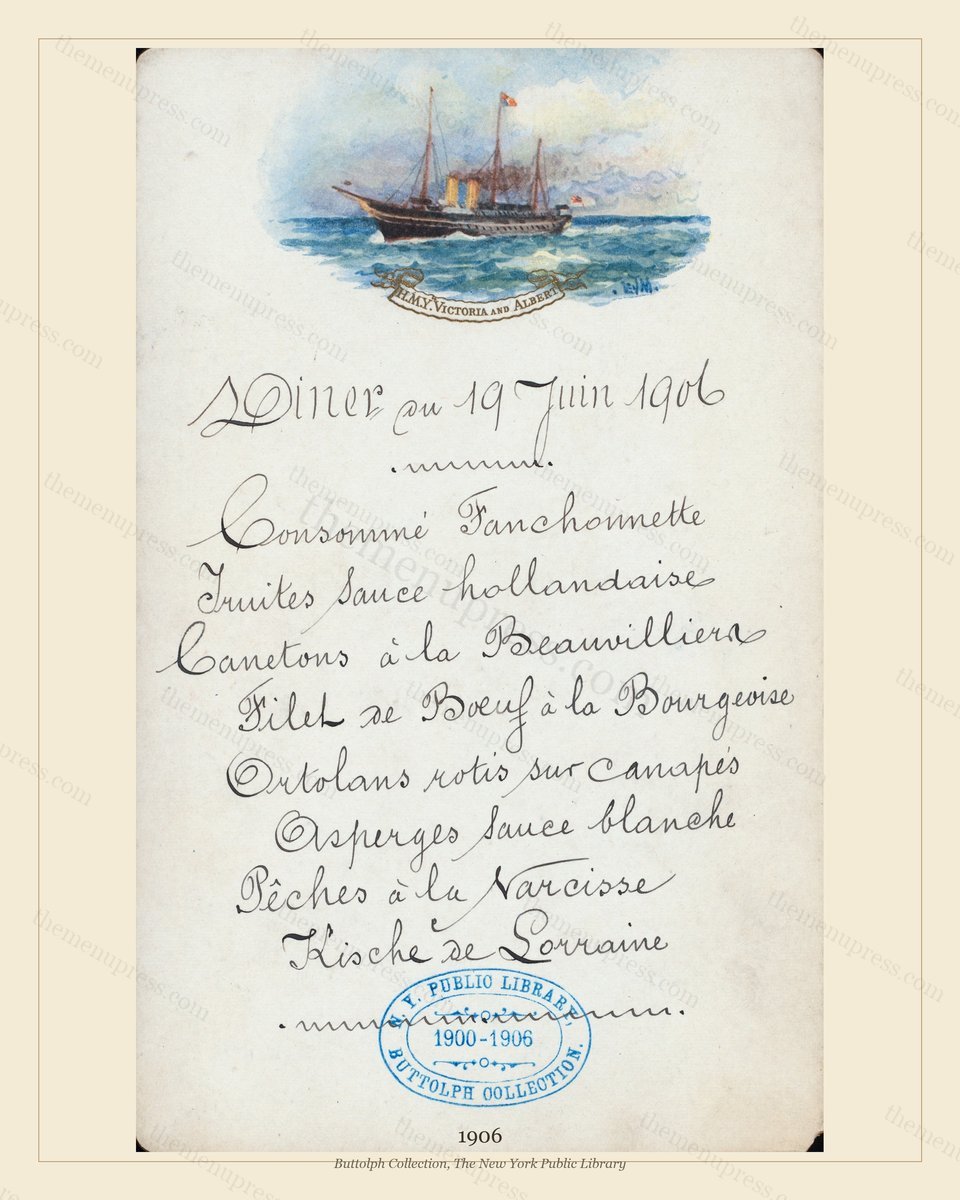
The Menu Press curates and republishes vintage menus from the public-domain Buttolph Collection at the New York Public Library. Each file ships in six print-ready sizes at 300 DPI — pick the size that fits the vintage frame you found, and you’re done.