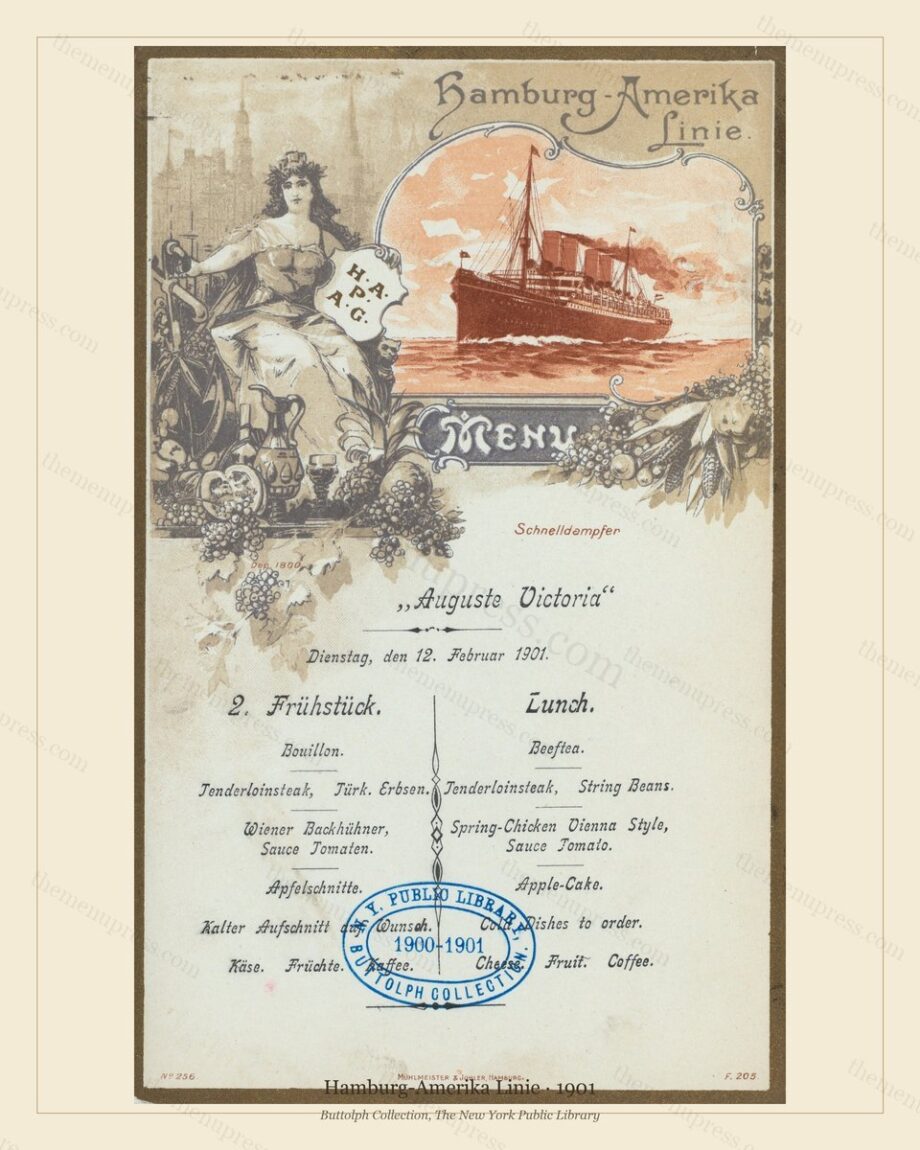
Where to Print Vintage Menu Art: Walgreens vs Mpix vs Giclée
TL;DR — Three real options at three real price points. Walgreens / CVS ($4–$20) is fine for testing a piece before you commit, but the photo paper is shiny in a way that fights the menu. Mpix or Printique ($10–$50) on matte fine-art paper is the sweet spot — 80% of the heirloom look at 25% of the cost. A local giclée shop ($30–$90) is the real thing: pigment ink on cotton rag, the surface a 1900 menu actually had. The decision isn’t “what’s best,” it’s “is this piece the centerpiece of a wall, or one of six?”
The decision behind the decision
Before you compare shops, decide what the print needs to do.
A 16×20 menu hung alone behind the bar is the thing the room is built around. Guests look at it for ten seconds, then look again later. Up close. Paper choice changes how it reads.
A row of six 11×14 menus on a dining-room wall is a pattern. Guests register the wall as a whole, rarely walk up to inspect one. Paper texture matters less than frame consistency.
Same file, same restoration, same price from us. Wildly different print decisions.
That’s the lens for everything below.
Path A — Walgreens, CVS, Costco, Walmart Photo
The reflex move. Upload, pay $5–$20, pick up in an hour.
What works: Speed and price are unmatched. For a quick before-you-commit test — “do I actually like an 11×14 of this on my wall before I buy six?” — there is no faster path. The color is reasonably accurate; the resolution at 300 DPI is more than enough.
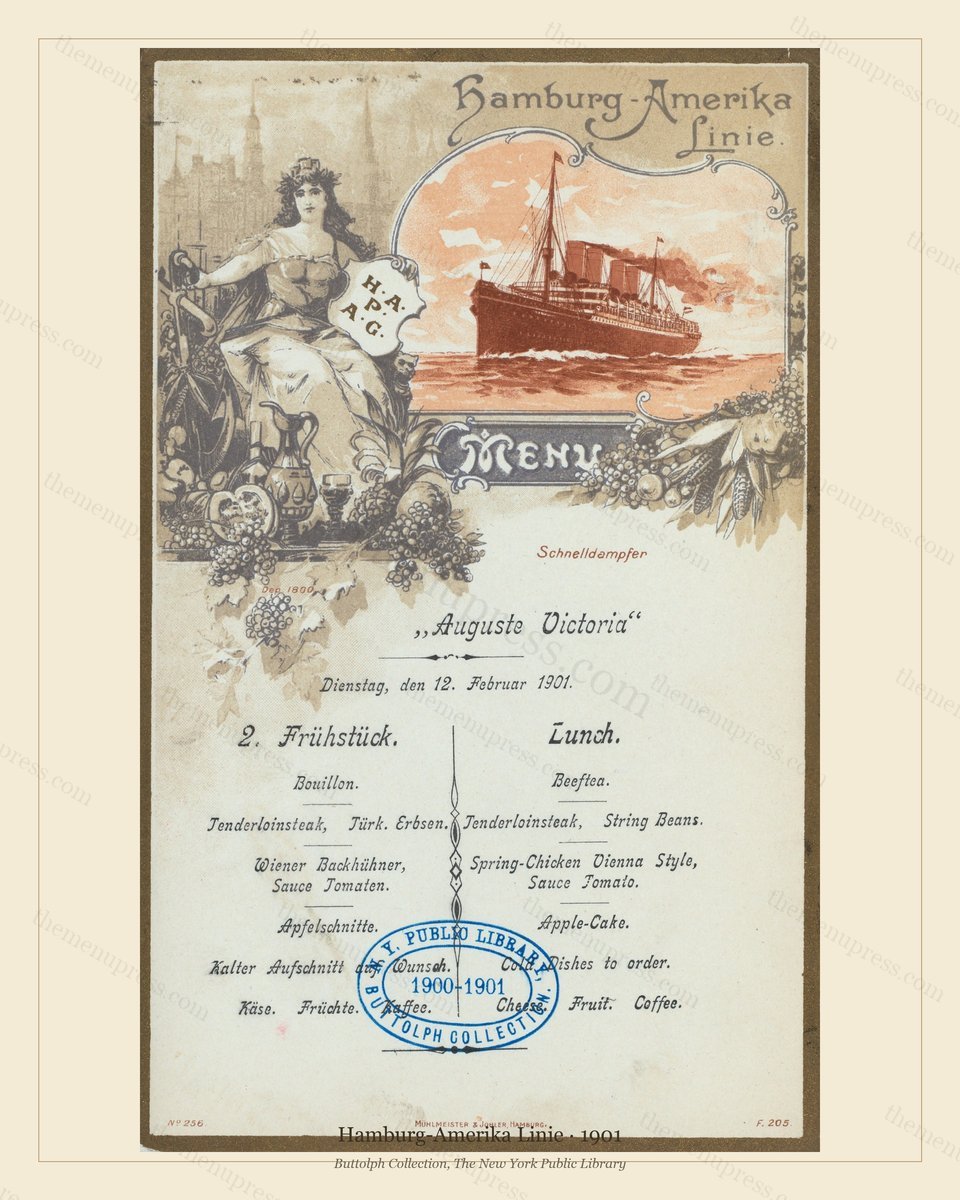
What doesn’t: All four chains print on glossy or semi-gloss photo paper by default. Vintage menus from 1880–1925 were printed on uncoated paper — lithographic card, sometimes laid paper, occasionally onion-skin for the room-service slips. Photo paper sheen does the opposite of all of that. The reflection across the menu surface reads as “this is a digital file someone printed,” not “this is an old menu.” From across the room, fine. From three feet away, conspicuously wrong.
The trick that nobody tells you: Costco Photo accepts uploads at standard frame sizes and you can sometimes request matte finish on larger prints (16×20 and up). Walgreens doesn’t. If you must use a chain photo lab, prefer Costco for the bigger sizes.
When to use this path: Testing a sample. Decorating a casual space — a home office, an Airbnb. Never for a signature piece in a public venue.
Path B — Mpix, Printique, FedEx Office, Staples
The middle path, and where the math actually breaks in your favor.
Mpix and Printique (online, ships in 3–5 days)
These are the photo labs the wedding-photographer industry uses. They have proper fine art matte papers: archival, cotton-blend, uncoated surface. Mpix’s “Fine Art” line and Printique’s “Hahnemühle Photo Rag” are both good choices for vintage menus. Expect $12–$25 for an 11×14, $25–$50 for 16×20.
The difference between Walgreens and Mpix is not subtle. The matte surface absorbs light instead of reflecting it. The blacks read deeper. The off-whites read like aged paper instead of fluorescent printer-white. From three feet away, a Mpix print of a 1905 menu looks like a 1905 menu under glass.
FedEx Office, Staples, UPS Store (walk-in)
Same price tier ($10–$50), faster turnaround (often same-day). The quality is lower than Mpix — these are general-purpose business printers, not photo labs — but with one critical request, you can close most of the gap:
Ask for “matte cardstock” instead of “photo paper.”
It’s the same price. It looks dramatically better. The default at FedEx is glossy photo stock; you have to specifically request the matte. If they ask “do you want premium photo or standard,” ask for uncoated heavyweight matte instead.
When to use this path: Most customers, most projects. Gallery walls of 4–8 menus. Home dining rooms. Restaurants where the menus are decor, not signature.
Path C — Local giclée print shop
This is the real thing. Pigment ink (not dye) on archival cotton rag paper. The surface texture is what a 1900 lithographic menu actually had. Color depth and warmth you can read from across the room.
How to find one: Google “giclée printing near me” or “fine art printing [your city].” Most mid-sized US cities have one or two. Often they share space with frame shops or photo galleries. Ask if they print on Hahnemühle Photo Rag, Canson Rag Photographique, or Moab Entrada Rag — all three are correct papers for vintage menu work.
Cost: $30–$60 for an 11×14, $60–$120 for a 16×20. Higher than Mpix, lower than custom framing. About 2–3x what a chain photo lab charges.
The honest test of whether it’s worth it: Stand back ten feet. If the difference between a Mpix matte print and a giclée print is visible to you at ten feet, the spot deserves a giclée. If it’s not visible at ten feet, Mpix is the better choice.
For most pieces, the answer is Mpix. For the one piece behind the bar — the menu the whole room is built around — the giclée is the right answer.
A word on paper, because nobody talks about it correctly
Three rules:
1. No glossy. No semi-gloss. No “luster” finish. All three were invented for photographs. They are wrong for printed paper artifacts. A menu under glass reads like a menu. A menu under glass on glossy stock reads like a poster of a menu.
2. Matte uncoated is correct. Matte coated is acceptable. “Coated” means there’s a thin polymer layer over the paper fibers; it sharpens the print but slightly dulls the surface texture. Uncoated lets the fibers breathe. For 1880–1925 menus, uncoated is closer to the original.
3. Cotton rag is the upgrade. A 100% cotton rag paper has a different hand — slightly heavier, warmer in tone, with a subtle texture you can feel before you can name it. This is what museums use to reproduce historic prints. It costs 2–3x what a standard matte paper does. For one signature piece, the difference is worth $30.
A decision shortcut
If you can only answer one question to choose a path, ask: how close will guests get to this print?
- Across the room only (entryway, hallway, above bar shelving where bottles block close inspection): Path A is fine.
- Three to six feet, occasional close look (gallery wall, dining room, home decor): Path B with matte paper.
- Close inspection, signature piece, customers stand in front of it and study it (behind the bar, host stand, statement wall): Path C giclée.
That’s the whole framework.
Once you’ve printed, you need to frame it
Paper is half the decision. Frame is the other half — and is where most of the budget goes. For the full breakdown on off-the-shelf vs. vintage thrift vs. custom framing, see our print and frame budget guide, which maps each print path to a frame path by venue and use case.
The Menu Press restores and republishes vintage menus from the public-domain Buttolph Collection at the New York Public Library. Each file ships in six print-ready sizes at 300 DPI — drop into any of the print paths above without resizing.