How to Build a Cocktail Bar Gallery Wall with Vintage Menus
TL;DR — A bar wall of vintage menus is one of the highest-return decor moves in hospitality: the cost is $25–$75 per piece (file + matte print + thrift frame), the install takes a Sunday afternoon, and the visual payoff lasts as long as the bar exists. The four decisions that matter, in order: (1) wall (size and lighting), (2) menu selection (4–8 pieces, one decade or one theme), (3) frame consistency (all dark wood OR all gilded gold — never mixed), (4) hanging pattern (grid for serious, salon-style for warm). This piece walks each one.
Why a bar uses vintage menus instead of art prints
Most cocktail bars decorate with prints, posters, or framed graphics. They all do the same job at the same emotional register.
A wall of vintage restaurant and hotel menus from 1900–1925 does something different. It tells guests that the bar is in the same lineage as the rooms those menus came from. The 1903 Hotel Astor cocktail list, the 1925 Plaza Persian Room menu, the 1898 Delmonico’s dinner card — they were the bars of their era. Hanging them on your wall is a declaration: this is what we are part of.
The reason it works as decor is that it’s not decor. It’s primary source material. Guests look at it the way they’d look at a museum case — drawn in, curious, present.
For a bar that’s trying to feel like it has roots, this is the move.
Decision 1: The wall
Three wall types work; one doesn’t.
Behind the bar (above the back-bar shelving): The signature spot. Pick this if the bar back is at least 8 feet wide and the shelving stops at least 30 inches below the ceiling. You’re looking for one statement piece (16×20 or 20×30) anchoring the center, or a tight row of three 11×14s above the highest shelf.
Adjacent dining wall or banquette wall: The volume spot. A full wall of 6–10 menus, varied in size, hung salon-style or in a 2×3 grid. Guests sitting at the banquette spend half an hour with this wall in their peripheral vision; over the course of a season, regulars know every piece. This is the spot most likely to start conversations.
Entry corridor or by the host stand: The first-impression spot. One or two large pieces (16×20 or 20×30), hung at eye height, well-lit. First thing guests see; sets expectations for what’s inside.
What doesn’t work: Wall behind a high-traffic bar service area where servers walk through constantly. The eye doesn’t have time to land. Save that wall for paint.
Decision 2: Menu selection — the cohesion rule
Eight menus that share something read as a collection. Eight menus that share nothing read as clutter.
Pick exactly one cohesion principle from these four:
- One decade: All from 1920–1929. Speakeasy and Prohibition-era hotel menus, jazz-age cocktail lists, late-Ritz dining cards. This is the strongest principle for cocktail bars — the decade has visual unity (Art Deco typography, gilded margins) and emotional unity (the bar style guests already associate with cocktail culture).
- One city: All Manhattan menus 1895–1930. Or all London hotel menus 1900–1925. Or all Paris bistro menus from the Belle Époque. The geographic frame creates a sense of place even when the menus span 30 years.
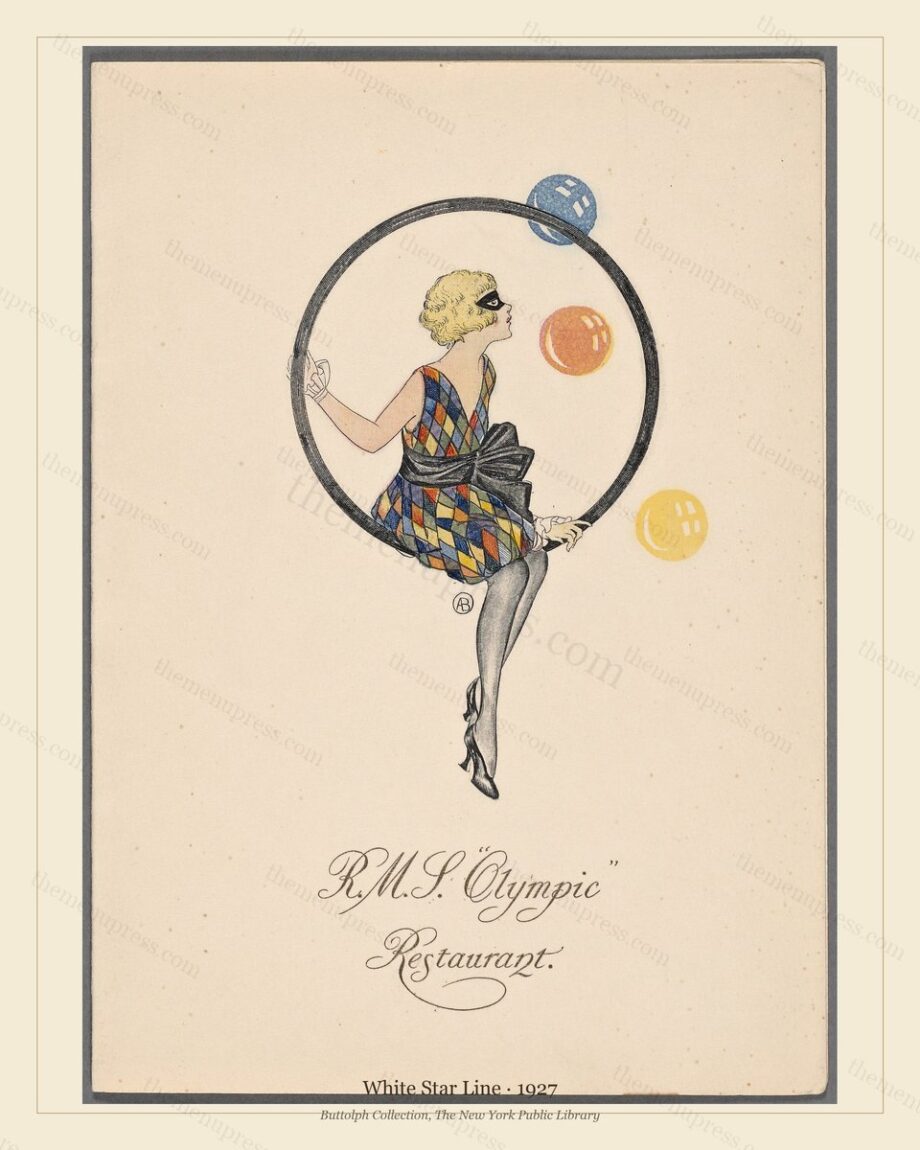
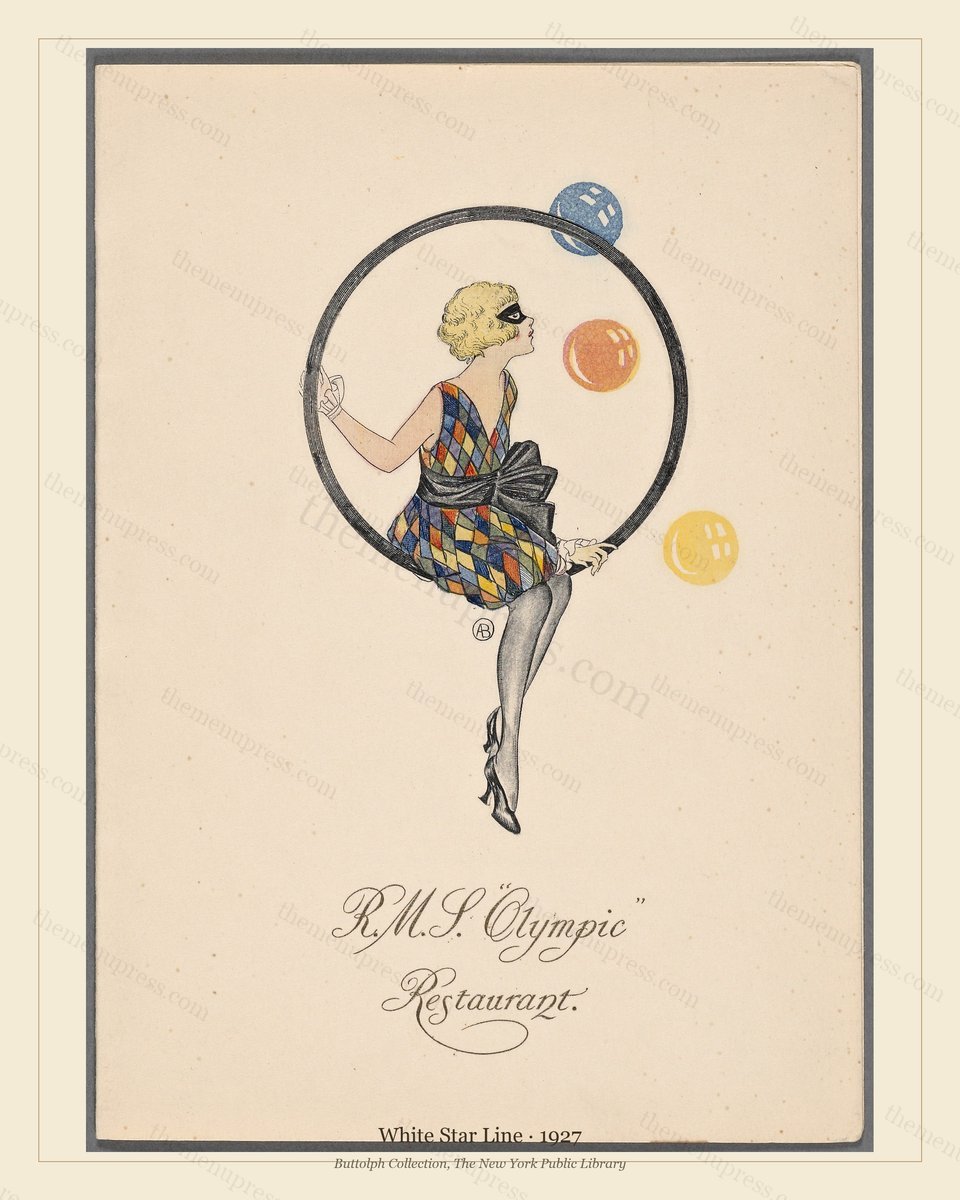
- One genre: All ocean liner menus. All hotel restaurant menus. All railroad dining car menus. The form factor is similar across all pieces, which gives the wall visual rhythm.
- One color palette: All pieces with cream or warm-ivory backgrounds and dark text. Or all pieces with gilded borders. This is the subtlest principle and the hardest to source for, but it produces the most visually unified wall.
What kills cohesion: Mixing eras. A Belle Époque French menu next to a 1955 American diner card next to a 1910 ocean liner card reads as random — even if each piece is excellent on its own. Pick one principle and commit.
For a cocktail bar specifically, one decade (1920s) and one city (Manhattan or Paris or London) are the two principles that almost always work.
Decision 3: Frame consistency
This is the rule guests don’t consciously notice but unconsciously respond to.
All frames must agree on one thing. Either:
- All dark wood. Walnut, mahogany, ebonized oak. Matte or low-sheen finish. Reads as serious, historical, library-coded.
- All gilded gold. Composition gold, gilt frame, or aged brass corner detail. Reads as Belle Époque, Gilded Age, jewel-box bar.
- All matte black (with a generous off-white mat). Reads as gallery, contemporary, intentional.
What fails: A wall mixing gold frames, dark wood frames, and modern black frames. Even if each individual frame is correct, the wall as a whole reads as scattered.
The frames do not need to be identical. They can be different sizes, different molding profiles, even different shades within the same family. They just need to share one principle. A row of six thrift-store gilded frames, all different but all gold, reads as a curated collection. A row of six identical brand-new frames reads as IKEA.
This is the case for vintage thrift frames over new ones — they’re cheaper and they give the wall the irregularity that makes it look like the bar’s been collecting these for years.
Decision 4: Hanging pattern — grid vs. salon
Two patterns work, and they signal different things.
The grid (2×3, 2×4, 3×3)
All frames same size, hung in a strict rectangular grid with 2–3 inches between frames. Serious, museum-coded, calm. Reads as “this bar has a curator.”
When to use it: When the menus themselves are visually complex (ornate borders, dense text, busy typography). The grid frame provides the calm the menus don’t have.
Technical tip: Use a laser level. Hang from the inside corners of the grid, working outward. Grid hanging is unforgiving — every misalignment is visible.
Salon-style (mixed sizes, asymmetric arrangement)
Frames of different sizes, hung with shared edges (top row aligned, bottom row aligned, or center vertical line aligned). Warm, eclectic, lived-in. Reads as “this bar has been collecting these for thirty years.”
When to use it: When the menus themselves are visually simpler (clean typography, generous white space, restrained borders). The salon-style arrangement provides the visual interest the menus don’t.
Technical tip: Lay the entire arrangement on the floor before any nail goes in the wall. Cut paper templates the exact size of each frame, tape them to the wall, live with the arrangement for 48 hours before committing. Salon walls fail when one frame is in the wrong spot — and you can only see the wrong spot once everything is up.
Three example walls
The Manhattan Speakeasy Wall Six pieces. All 1920–1929, all from New York hotels and supper clubs. 2×3 grid, all 11×14, all matte black frames with generous cream mats. Above the banquette in the dining area. Total cost: ~$280 (six files + six matte prints from Mpix + six IKEA Ribba frames).
The Belle Époque Bar Back Three pieces. All from Paris 1895–1914 grand hotels. Centered above the back-bar shelving. One 16×20 anchor (Hotel Ritz dinner card) flanked by two 11×14s (Café de la Paix breakfast cards). All gilded gold thrift frames, mismatched but cohesive. Total cost: ~$160.
The Transatlantic Crossing Wall Eight pieces. All ocean liner menus 1900–1934. Salon-style on a long banquette wall. Mixed sizes from 8×10 to 16×20. All dark walnut thrift frames. Total cost: ~$240.
One last decision: lighting
A wall of vintage menus needs dedicated lighting to actually do its job. Without it, guests register the wall as “some stuff over there” and look away. With it, the wall is a feature.
The cheap solution: Picture lights. Battery-powered LED picture lights from Amazon ($25–$60 each) clip to the top of each frame, last 4–6 weeks per battery on warm bars, and require no wiring. Good enough for most rooms.
The proper solution: Track lighting on a dimmer, aimed at the wall at a 30-degree angle, warm-white bulbs (2700–3000K). Costs $150–$400 for a small bar wall, requires an electrician.
What kills the wall: Overhead ceiling light directly above. Wall washers in cool white. Recessed downlights pointed straight down. Every one of those creates harsh shadows on the frames and washes the print color flat.
The full breakdown on print options (Walgreens vs Mpix vs giclée) and frame options (off-the-shelf vs thrift vs custom) lives in our print and frame guide. Use it to map each menu to the right print path for the wall you’re building.
The Menu Press curates and republishes vintage menus from the public-domain Buttolph Collection at the New York Public Library. Browse our Manhattan and Speakeasy collections for the strongest cocktail-bar pieces.