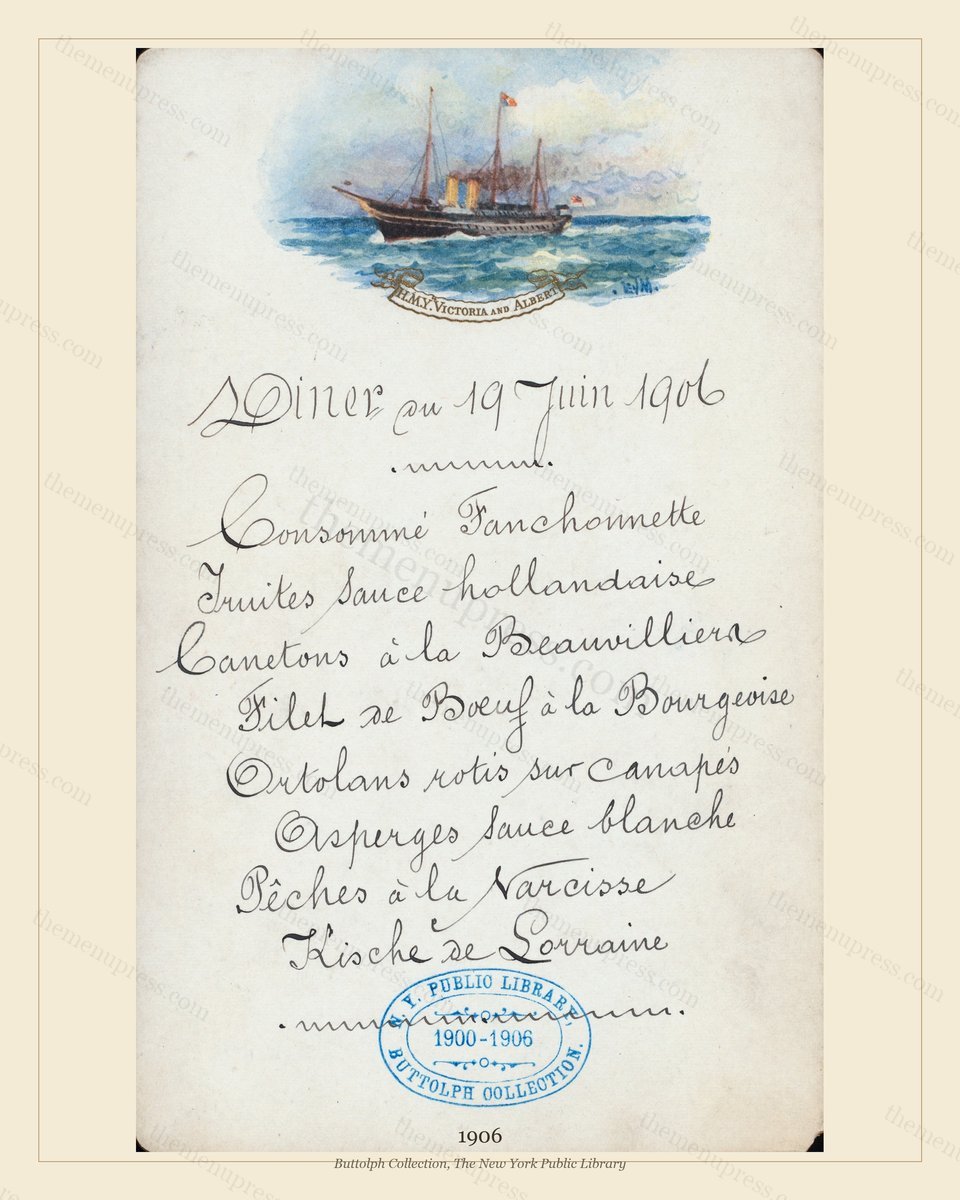
A real vintage frame from Goodwill or an estate sale outperforms a $180 new frame every time. Five places to source antique frames, what to look for, and the one logistical detail nobody mentions.
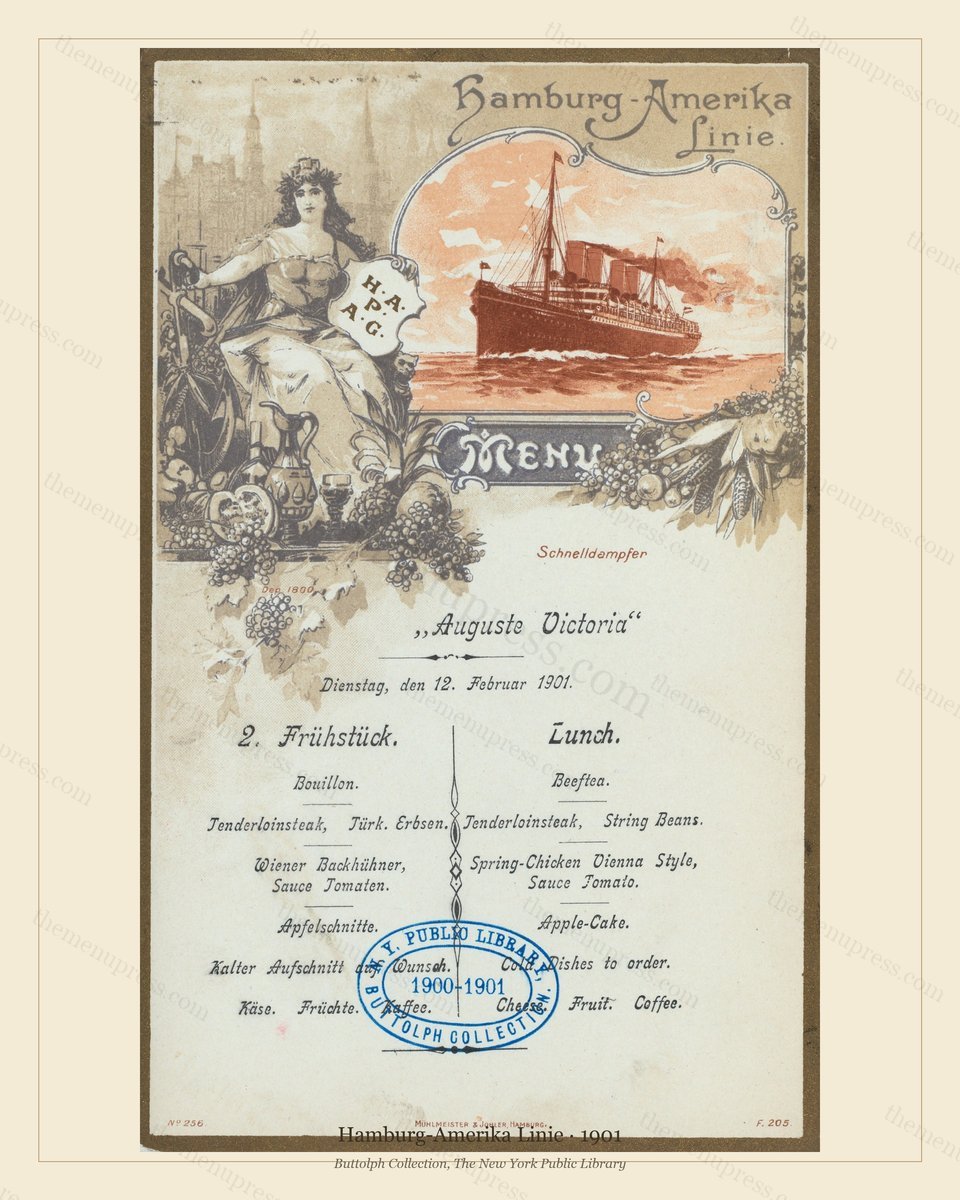
Where to Print Vintage Menu Art: Walgreens vs Mpix vs Giclée
Three real options at three price points. Walgreens for testing, Mpix or Printique for the sweet spot, and a local giclée shop for the one signature piece. A practical print-path guide.
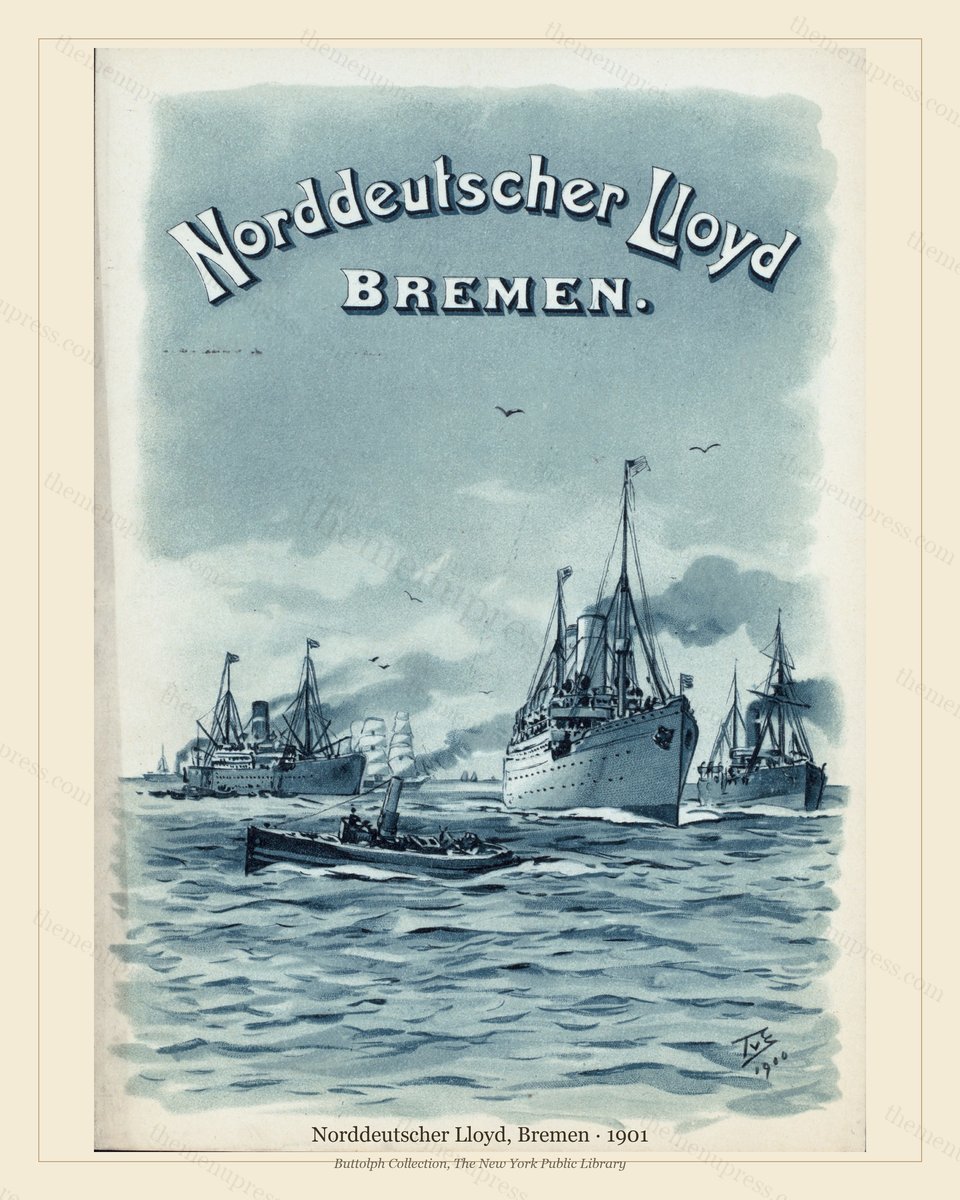
Norddeutscher Lloyd: The Forgotten German Atlantic Giant
From Bremen in 1857 to the Blue Riband in 1897 to two world wars and erasure. The line that pioneered the watercolour menu cover and was destroyed twice.
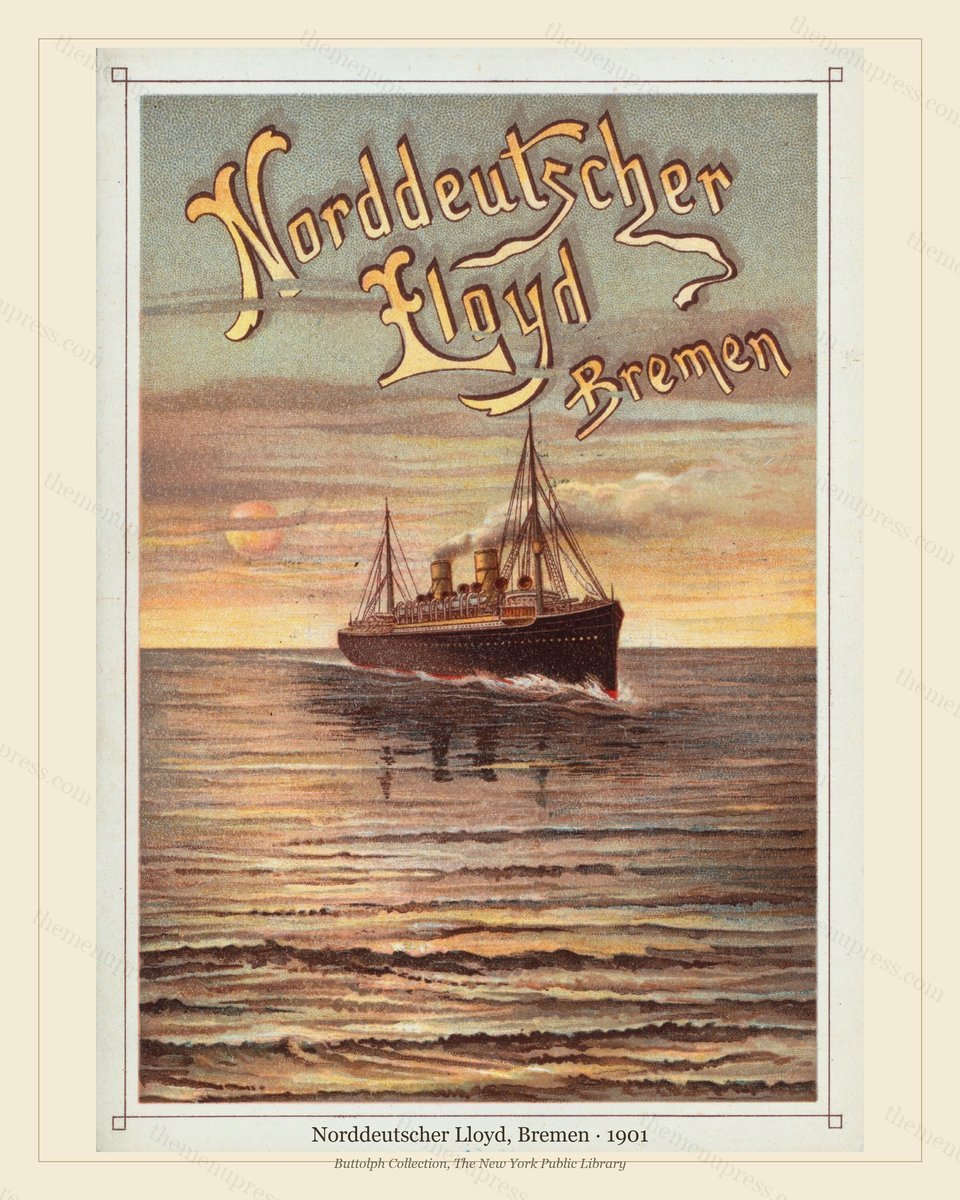
What First-Class Passengers Ate on a 1900s Transatlantic Crossing
An eleven- to fourteen-course Escoffier-era French dinner across two hours: course by course, with notes on what changed between 1900 and 1935.
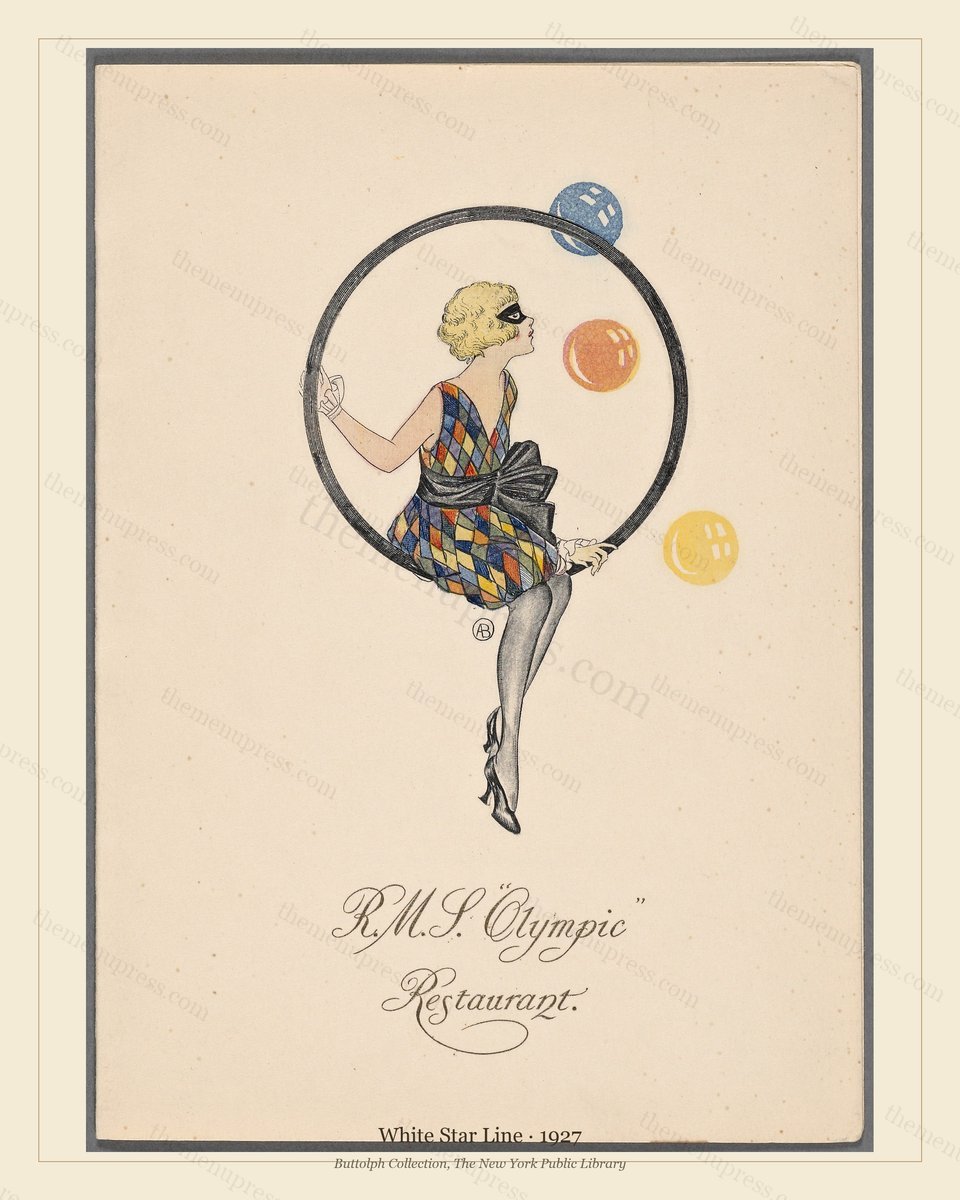
RMS Olympic 1927: The Last Year of an Art Deco Liner
The 1927 menu programme from White Star Line’s R.M.S. Olympic, sister ship of the Titanic, at the peak of her late-career Art Deco register.
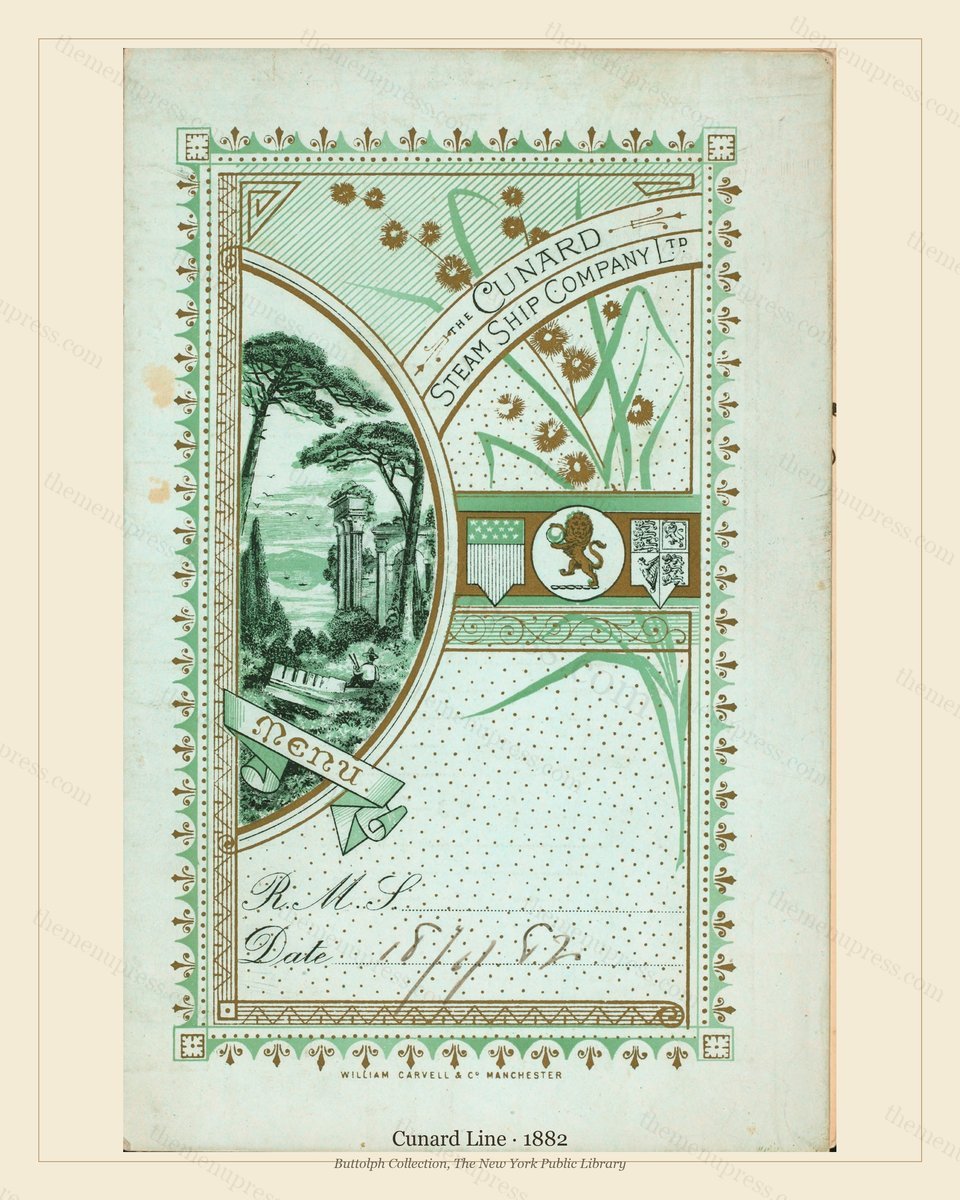
A History of Cunard Line Menus, 1840–1934
Ninety-four years of Cunard menu design in four phases: spare letterpress, heraldic embossed restraint, restrained illustration, and inter-war Art Deco.
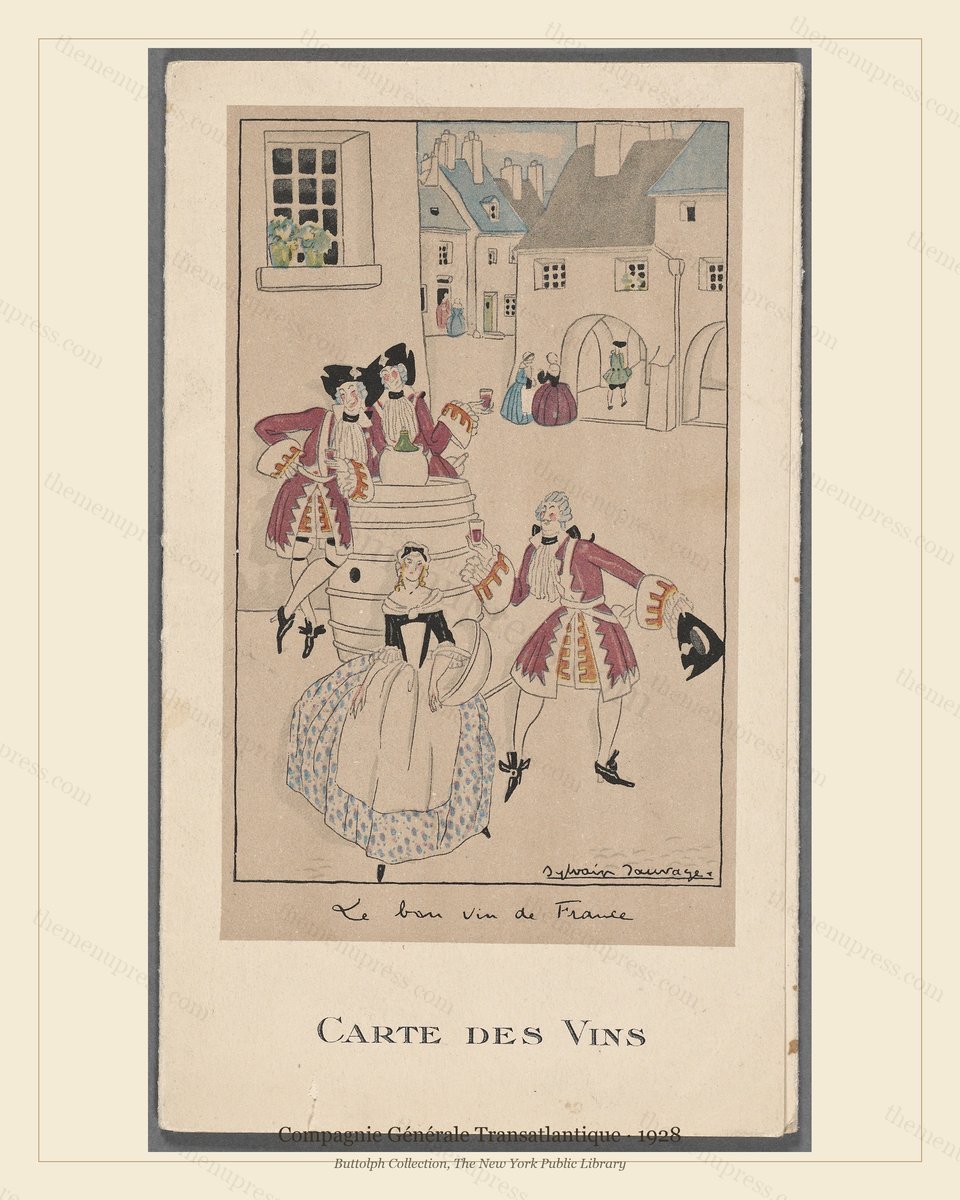
The 1928 CGT Carte des Vins: Art Deco’s High Point at Sea
A close design reading of the 1928 Compagnie Générale Transatlantique wine list, among the strongest single design objects in the entire Buttolph archive.
Print & Frame Mastery: The Complete Guide to Vintage Menu Art
The three decisions that determine whether a vintage menu print reads as serious wall art or as a craft-store reproduction: paper, frame, and scale. A complete production guide.
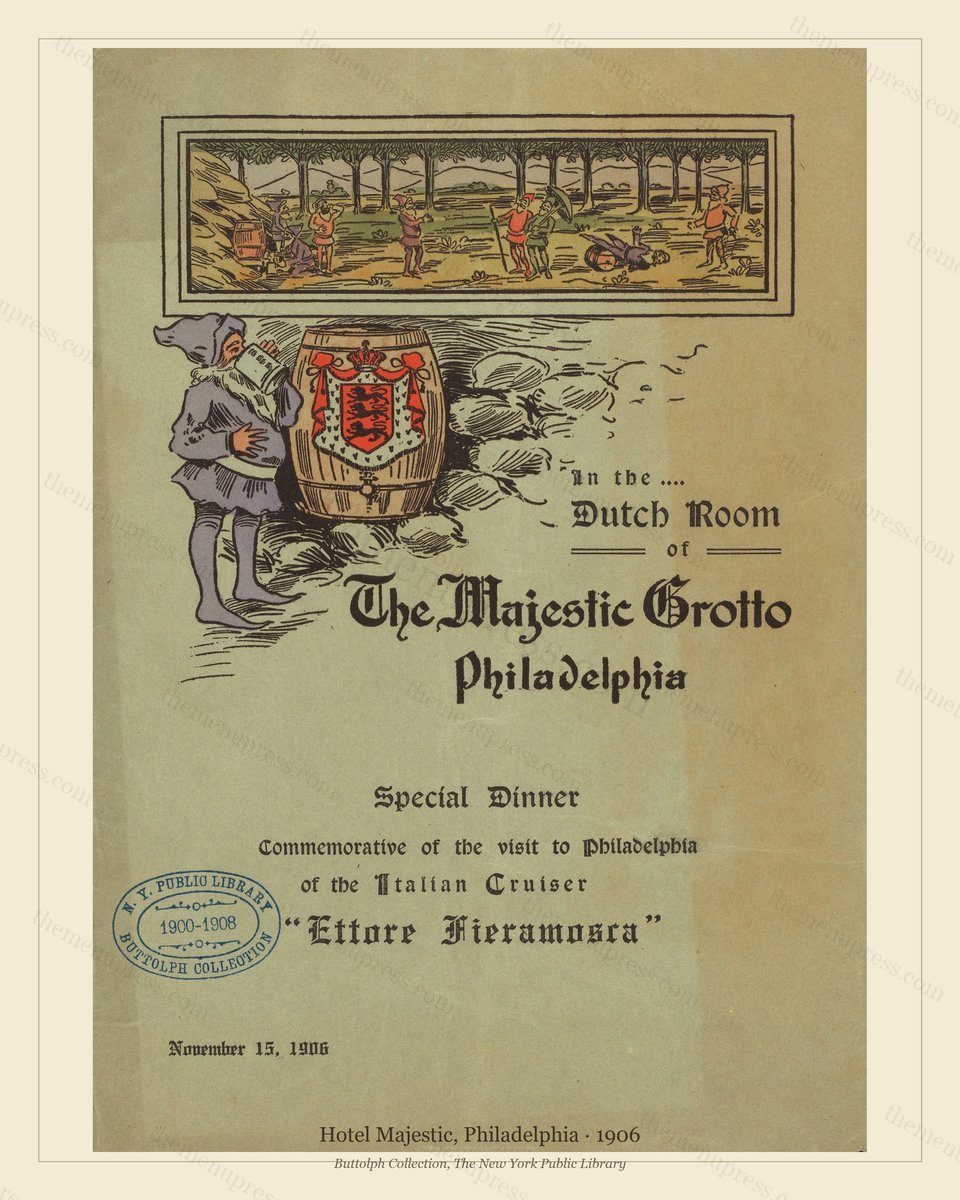
The Buttolph Collection: A Curator’s Guide
The largest single archive of historic printed menus in the world, built between 1899 and 1924 by a New York Public Library cataloguer named Frank E. Buttolph. Who she was, what is inside, and why it survived.
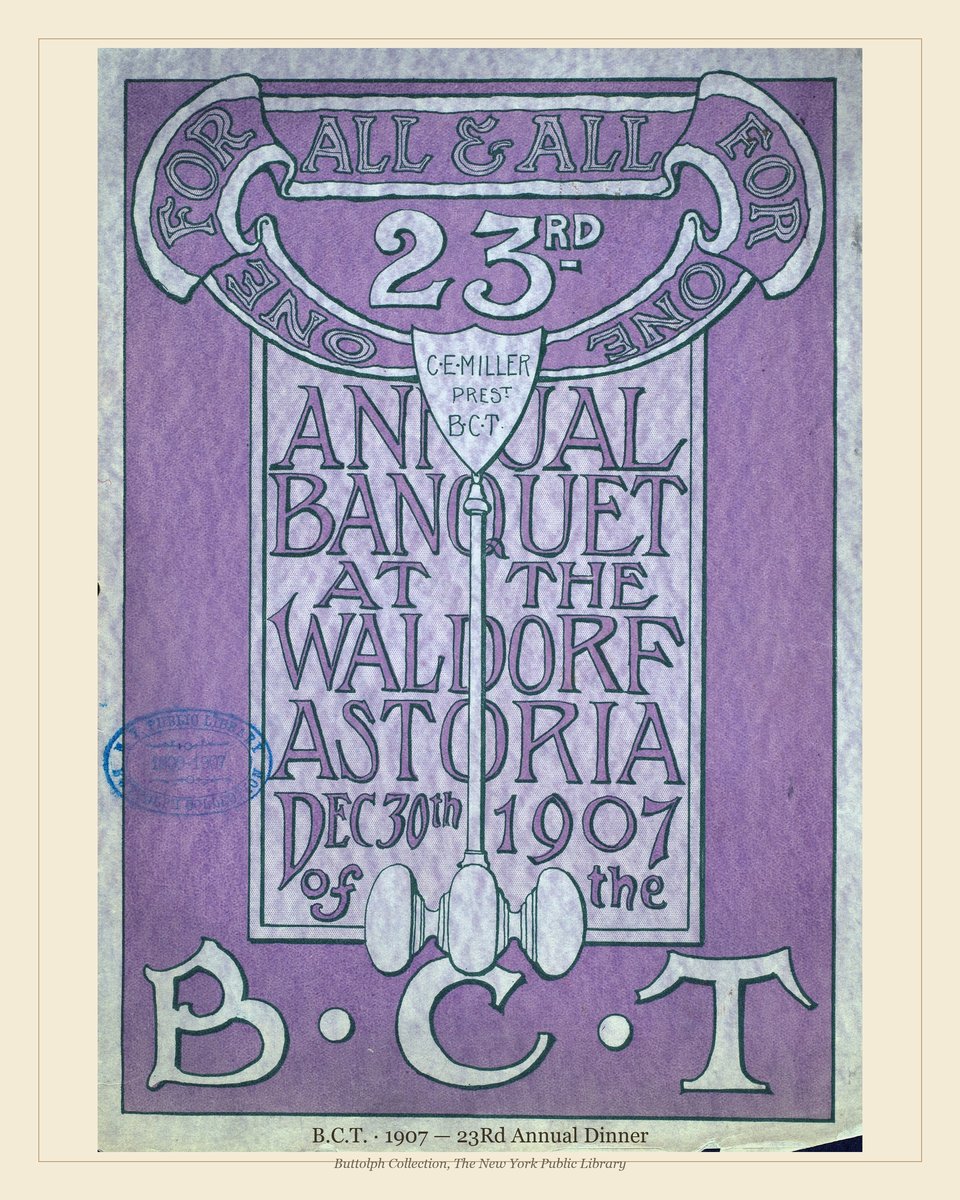
Designing a Speakeasy Bar Wall with Vintage Menus
A practical playbook for bar owners and designers: how to build a single-statement, three-piece, or chronological menu wall that reads as curated rather than themed.